

If you can see mold, you usually don't need a test. You need to fix the moisture and remove the growth.
Testing still has a place. Here's when it helps, when it doesn't, and what California renters should know.
Do you need a mold test if you can see mold?
Usually not. EPA says: "In most cases, if visible mold growth is present, sampling is unnecessary."
CDC is even more direct: "CDC does not recommend mold testing." Its advice is to remove mold you can see or smell. "You do not need to know the type of mold."
What about "black mold"? CDC describes Stachybotrys chartarum as "a greenish-black mold." It also says all molds "should be treated the same with respect to potential health risks and removal."
So the color or species doesn't change the plan. Find the moisture, fix it, and remove the mold.
Why can't a mold test tell you if your home is safe?
There's no official number to compare results against. EPA notes that "no EPA or other federal limits have been set for mold or mold spores." So sampling "cannot be used to check a building's compliance with federal mold standards."
Health effects also vary from person to person. CDC says "you cannot rely on sampling and culturing to know whether someone might become sick."
California studied the question too. Its Toxic Mold Protection Act of 2001 required the state health department to study whether permissible exposure limits (PELs) for indoor mold were feasible.
The department (now CDPH) reported back in 2005. It concluded that "sound, science-based PELs for indoor molds cannot be established at this time," according to a 2015 state Senate analysis.
When does mold testing help?
Testing helps when it answers a specific question. EPA's guide for professionals says sampling may be considered in cases like these:
A legal dispute. EPA lists cases where litigation is involved.
An unclear source. A musty smell with no visible mold is one example. EPA says you may suspect hidden mold "if a building smells moldy, but you cannot see the source."
Health concerns. EPA lists cases where health concerns are a problem. UNL Extension adds testing "requested by a health professional."
Even then, a careful mold inspection comes first. In building evaluations, NIOSH doesn't recommend routine air sampling for mold. It found "thorough visual inspections and/or detection of problem areas via musty odors are more reliable."
Hunting for hidden mold takes care. EPA warns that peeling back wallpaper, for example, can release spores. If you suspect hidden mold, EPA says to "consider hiring an experienced professional."
Testing after cleanup
Testing can also confirm the work. EPA says: "Surface sampling may be useful to determine if an area has been adequately cleaned or remediated."
After remediation, mold types and levels in indoor air "should be similar to what is found in the local outdoor air," EPA adds. EPA's finish line also includes a fixed moisture problem, with no visible mold or moldy odors left.
The IICRC's S520 remediation standard lists post-remediation verification among its topics. At Dryft, we call this clearance testing. We recommend an independent inspector do it after our mold remediation work, so the company removing the mold isn't grading its own work.
Air vs. surface mold tests: what's the difference?
Shopping for an air quality test for mold? Know the options and their limits first. EPA lists these sample types, among others:
Air samples collect spores from the air.
Surface samples check what's on a surface. UNL Extension says swabs or tape are often used.
Bulk samples are pieces of material, such as carpet, insulation, or wallboard.
Each has limits. EPA says air sampling "provides information only for the moment in time in which the sampling occurred, much like a snapshot." Surface swabs can miss mold that isn't visible, UNL Extension notes.
Indoor air also shifts. UNL Extension notes that airflow, pressure differences, and ventilation cause changes that "can change the sample results."
As UNL Extension puts it: "Mold testing cannot prove that there is no mold problem or that mold is the cause of health problems."
If you do test, hire carefully. EPA says sampling should be done by professionals with "specific experience in designing mold sampling protocols, sampling methods and interpreting results."
Are home mold test kits accurate?
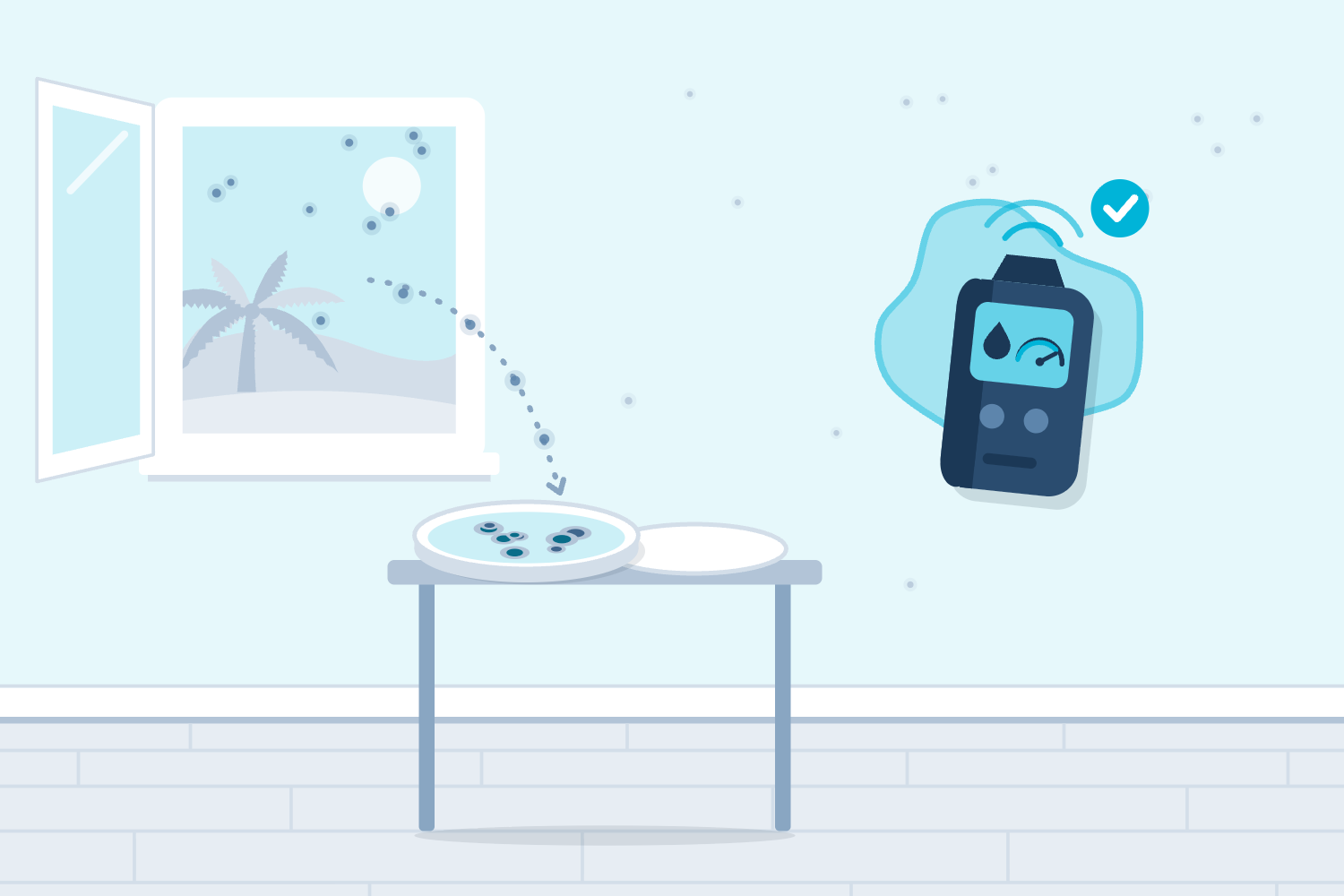
Some store kits work by growing mold on agar, a lab growth medium. North Dakota State University's Home Moisture site discourages them. It says the results "are seldom informative."
Its reason: mold spores are everywhere, and the standardized protocols needed to make sense of the data are lacking.
The bigger issues apply to any sample. There's no federal limit to compare against, and one sample is a snapshot.
What about the ERMI test? EPA scientists developed the Environmental Relative Moldiness Index as a research tool. EPA says it "has not been validated for non-research purposes."
For that reason, EPA "does not recommend the routine public use of ERMI in homes, schools, or other buildings." The fact sheet adds: "Inspection for water damage and mold remain the key to current EPA mold-assessment guidance."
Renting in California? What the law says about visible mold

A 2015 state law, SB 655, added "visible mold growth" to Health and Safety Code section 17920.3. That section lists conditions that can make a building substandard.
The wording is specific:
The growth must be visible, "as determined by a health officer or a code enforcement officer."
It excludes "mold that is minor and found on surfaces that can accumulate moisture as part of their properly functioning and intended use."
It counts only "to an extent that endangers the life, limb, health, property, safety, or welfare" of occupants, neighbors or the public.
Notice what the mold rule doesn't mention: a lab result. The standard is visible growth, judged by an officer.
SB 655 also added Civil Code section 1941.7. It says a landlord's duty to repair this mold doesn't arise until the landlord has notice of it. Nor does it arise if the tenant is violating certain duties of their own.
So tell your landlord as soon as you spot mold. This is general information, not legal advice.
Found mold, or smell it and can't find it? Contact us and we'll help you sort out next steps.
Related: Does bleach kill mold? What actually works
Sources
EPA: Mold Remediation in Schools and Commercial Buildings Guide, Chapter 3
EPA: The Environmental Relative Moldiness Index (ERMI) fact sheet
CDC NIOSH: Indoor Environmental Quality: Mold in the Workplace
University of Nebraska–Lincoln Extension: Healthy Homes: Should I Test for Mold? (G1819)
California Legislature: SB 655 (Chapter 720, Statutes of 2015), chaptered text