
Bleach can kill mold. But killing mold isn't the goal. Removing it, and fixing the moisture that fed it, is what solves the problem.
Here's what EPA and CDC actually say, and what works on different surfaces.
Does bleach kill mold?
Yes. Bleach is a biocide, and EPA describes biocides as "substances that can destroy living organisms." EPA names chlorine bleach as an example of a chemical "that kills organisms such as mold."
But EPA doesn't recommend it for routine cleanup. Its guidance says using a biocide like bleach "is not recommended as a routine practice during mold cleanup." EPA adds that professional judgment may call for one in some cases, such as when people with weakened immune systems are present.
Killing mold falls short for two reasons. First, you usually can't sterilize a home. EPA says a background level of spores will remain in most cases, and those spores won't grow once the moisture problem is fixed.
Second, dead mold still matters. EPA says dead mold "may still cause allergic reactions in some people." So "it is not enough to simply kill the mold, it must also be removed."
Why does mold keep coming back?
If the moisture source is still there, mold can return. EPA puts it plainly:
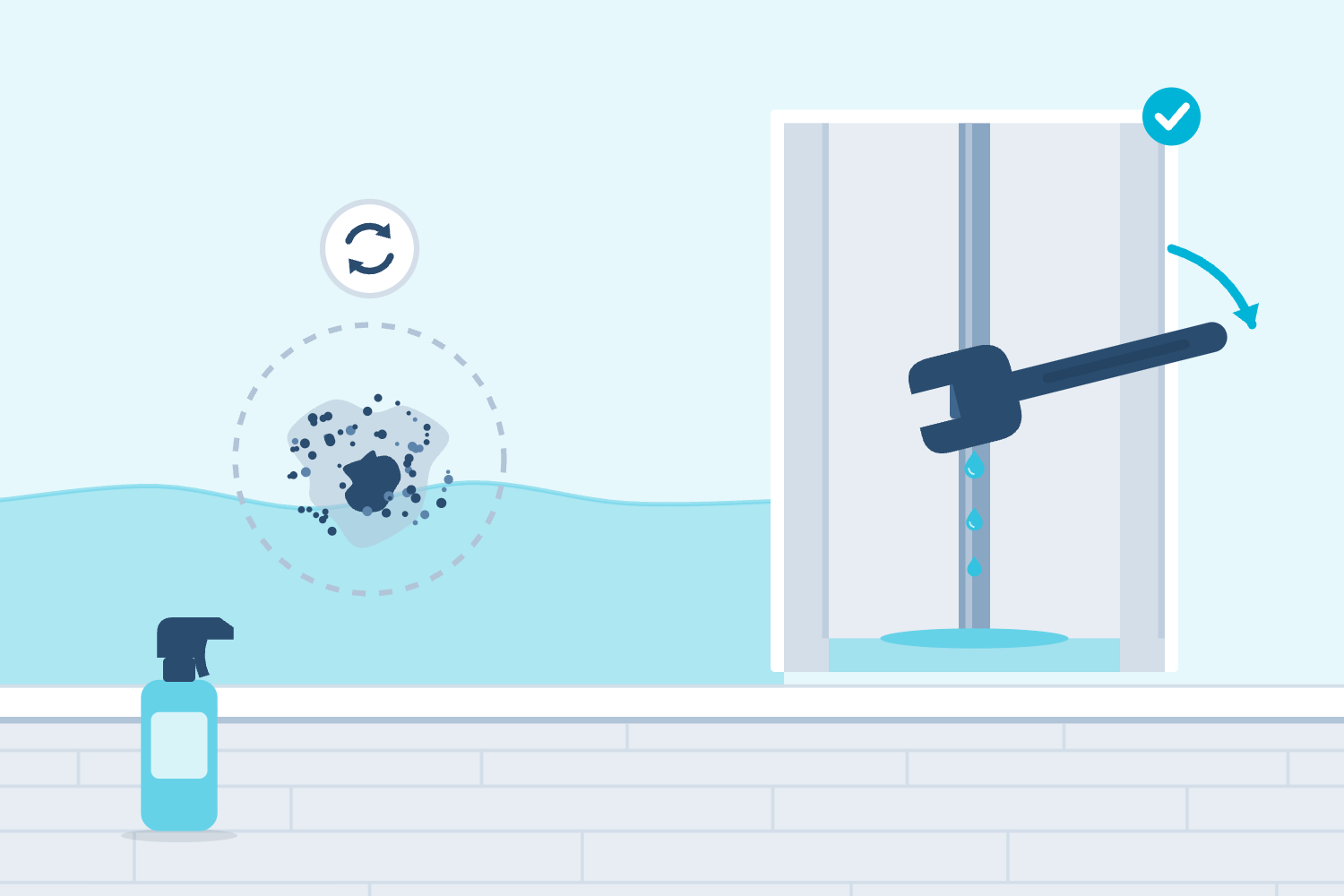
"If you clean up the mold, but don't fix the water problem, then, most likely, the mold problem will come back."
So if you want to know how to get rid of mold for good, start with moisture. CDC notes that mold grows around leaks in roofs, windows, or pipes, and where there has been a flood.
"The key to mold control is moisture control," EPA says. It also says to dry water-damaged areas and items within 24 to 48 hours to prevent mold growth.
If a leak or flood is behind your mold, our water damage restoration team can help track down the moisture and dry the structure.
Can you use bleach on moldy drywall?
This is where the surface matters.
For hard surfaces, EPA's advice is simple: "Scrub mold off hard surfaces with detergent and water, and dry completely."
Drywall is different. EPA's remediation guide counts gypsum board, or drywall, as a porous material. And EPA says porous materials "may have to be thrown away if they become moldy."
Here's why. Mold can "grow on or fill in the empty spaces and crevices of porous materials." So the mold "may be difficult or impossible to remove completely."
That's why a bleach spray isn't a real fix for moldy drywall. The goal is removal, and moldy drywall may need to be cut out and replaced.
Two more EPA tips. Don't paint or caulk moldy surfaces. And check for hidden growth, since mold can hide on "the back side of dry wall, wallpaper, or paneling."
How do you use bleach safely on mold?
If you choose bleach, follow the safety basics. CDC says: "Bleach or dish detergent can be used to clean mold in your home."
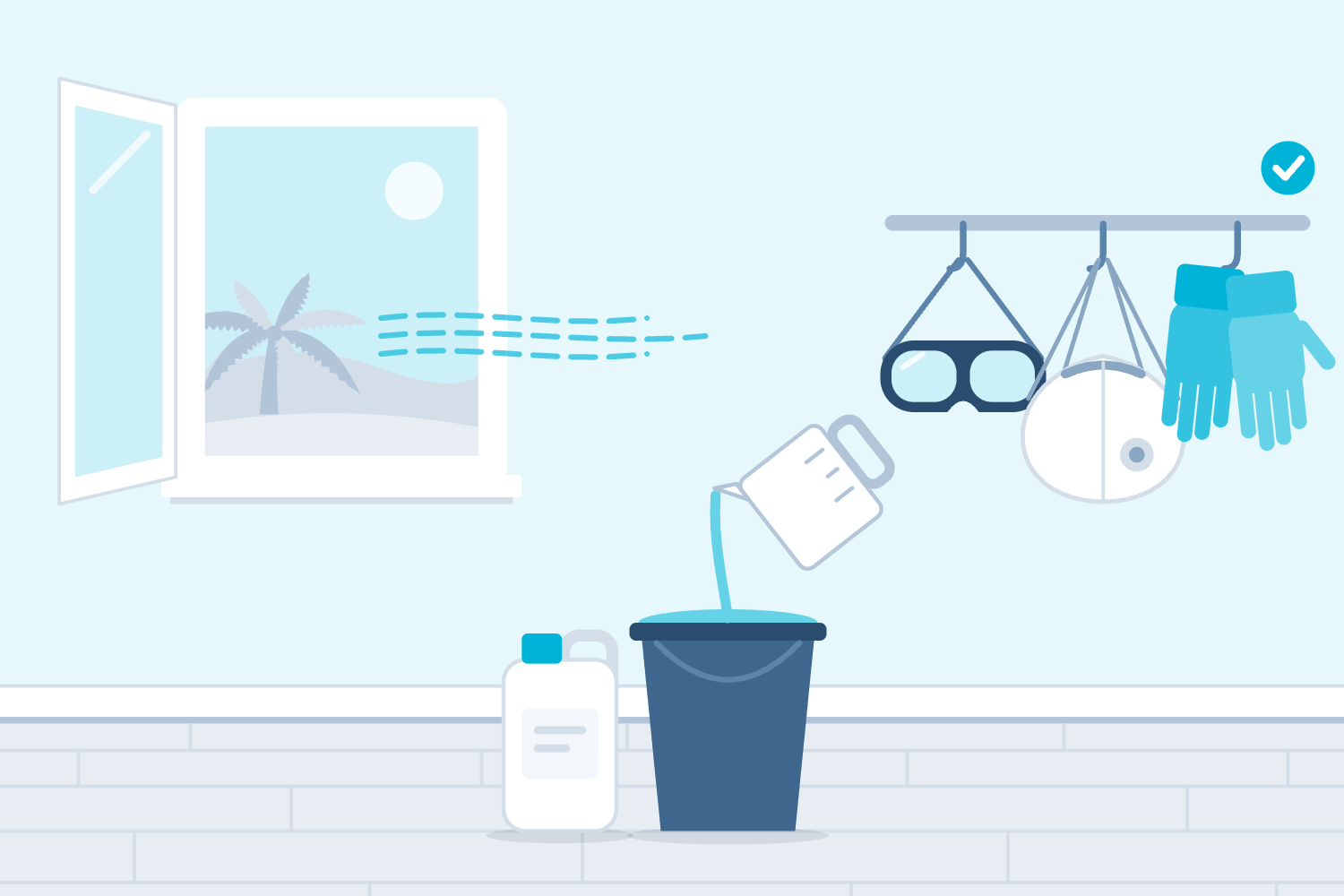
Dilute it. CDC says: "Use no more than 1 cup of bleach in 1 gallon of water."
Never mix it. "You should never mix bleach with ammonia or any other cleanser," CDC says. EPA warns that bleach mixed with ammonia cleaners can produce toxic fumes.
Air it out. CDC says to open windows or doors for fresh air. EPA says to ventilate and "exhaust the air to the outdoors."
Cover up. CDC recommends protective gloves (non-latex, vinyl, nitrile, or rubber) and goggles that give complete eye protection. For your mouth and nose, CDC says to "wear at least a NIOSH Approved N95 respirator."
Vinegar vs. bleach: which should you use on mold?
The EPA and CDC home cleanup pages we checked don't mention vinegar. EPA's advice for hard surfaces is detergent and water. CDC allows bleach or dish detergent.
Oregon State University Extension describes a half-water, half-vinegar spray. You wet the area, scrub, and let it dry fully. The page doesn't cite research for the method.
Our take: the process matters more than the product. Fix the moisture, scrub hard surfaces, dry everything, and replace porous materials that can't be cleaned.
When should you call a pro for mold removal?
Start with size. Here's EPA's threshold, word for word:
"If the moldy area is less than about 10 square feet (less than roughly a 3 ft. by 3 ft. patch), in most cases, you can handle the job yourself…"
"If there has been a lot of water damage, and/or mold growth covers more than 10 square feet, consult EPA's Mold Remediation in Schools and Commercial Buildings."
That second line points to EPA's guide for professionals. EPA also says to call in a professional when the damage came from sewage or other contaminated water.
Other signs it's time for help:
You smell mold but can't find it. For suspected hidden mold, EPA says to "consider hiring an experienced professional."
Your HVAC system may be involved. EPA says not to run it if you know or suspect it's contaminated with mold.
You have health concerns. EPA says to "consult a health professional before starting cleanup."
If you hire a contractor, EPA says to pick one with mold cleanup experience and check references. Ask them to follow EPA's remediation guide or other professional guidelines.
What professional remediation adds
The big difference is control. EPA's guide for professionals describes the main tools:
Containment. Plastic sheeting walls off the work area. Its purpose is "to limit release of mold into the air and surroundings."
Negative air pressure. A HEPA-filtered fan unit, exhausted outdoors, keeps contaminated air from flowing into nearby areas.
HEPA vacuuming. EPA recommends HEPA vacuums for final cleanup, after materials are dried and contaminated materials are removed.
Sealed removal. Moldy materials go into sealed bags before they leave the work area.
EPA scales these steps to the job. It generally recommends limited containment for 10 to 100 square feet of mold, and full containment above 100.
The industry also works from a written standard. The IICRC publishes ANSI/IICRC S520, the Standard for Professional Mold Remediation. The current version is the 2024 fourth edition.
At Dryft, our mold remediation follows S520, and we recommend independent clearance testing before anything is closed up. That way the company removing the mold isn't grading its own work. Found a patch and not sure what you're dealing with? Contact us.
Related: Do you need a mold test? When testing helps and when it doesn't