
A burst pipe is stressful. The good news: the first hour comes down to a few clear moves.
Here's the short version:
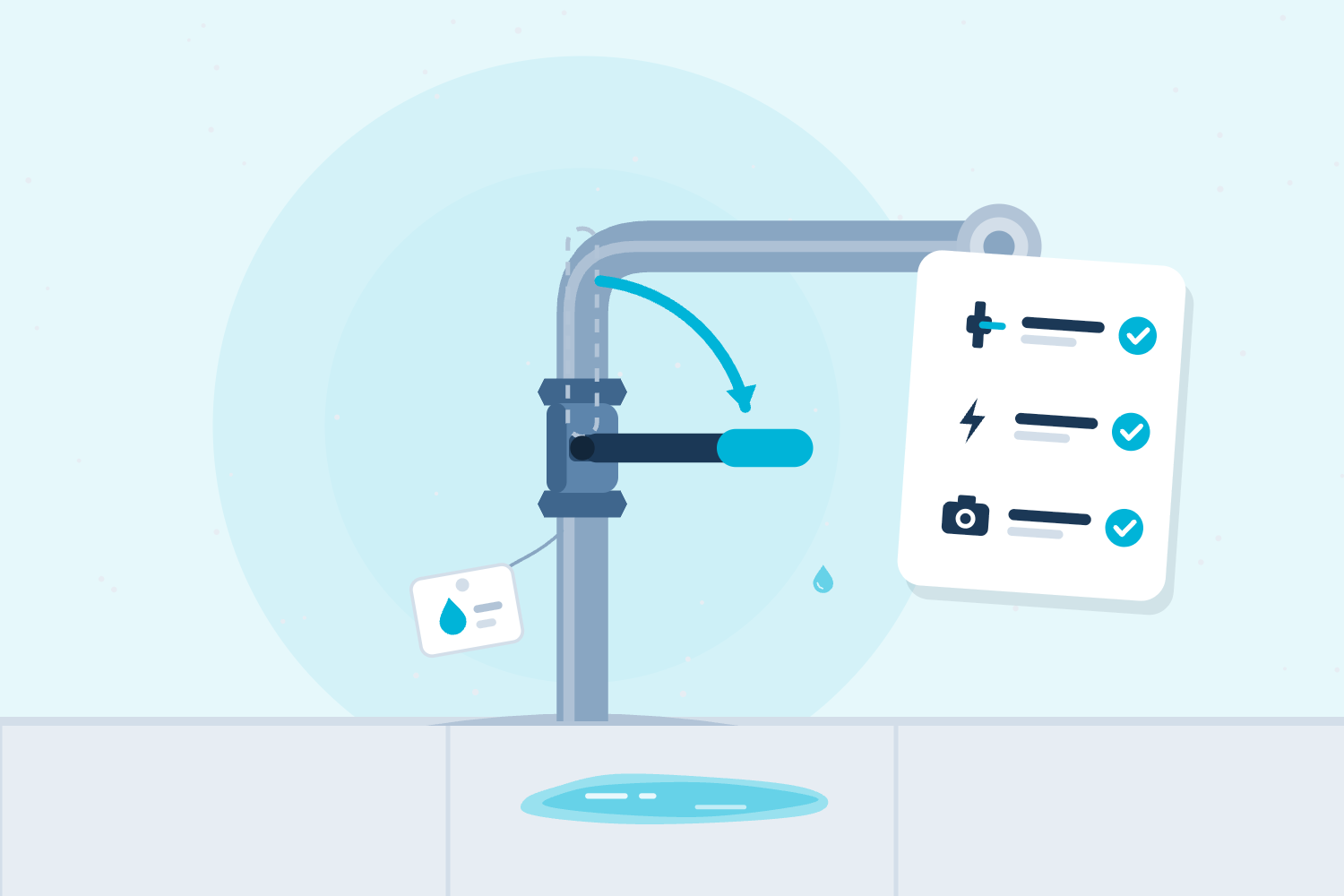
Shut off the main water valve.
Stay away from electricity in wet areas.
Photograph the damage before you clean up.
Report the damage to your insurance company.
Get drying started right away.
Dealing with a different water leak in your house? The first move is the same. The California Department of Insurance (CDI) says homeowners "should immediately attempt to find and stop leaks at the source."
How do I shut off the water main?
Close your main shut-off valve. Ready.gov describes it as the valve "for the main water line that enters your house."
Skip the street valve. Ready.gov notes the one in the cement box at the curb "is extremely difficult to turn and requires a special tool."
If your main valve won't close, call a plumber. A valve "may be rusted open or it may not close all the way," Ready.gov warns.
No leak today? Find your valve now and tag it. Ready.gov says to make sure everyone in your household knows where it is.
How do I stay safe around the water?
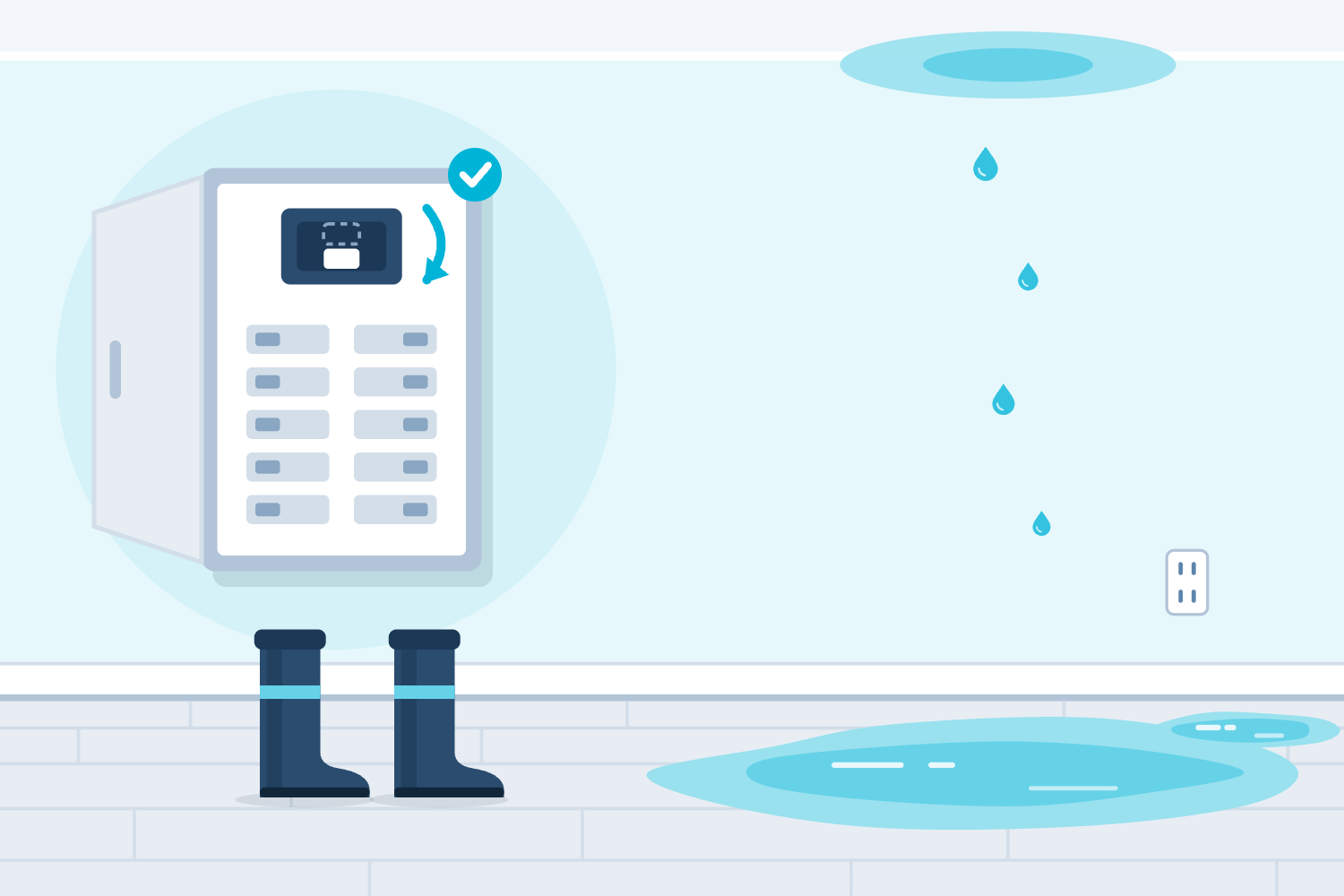
Standing water and electricity don't mix. The CDC gives clear rules:
If there's standing water and you can reach the main power switch from a dry spot, turn it off, even if it delays cleanup.
If you'd have to step into standing water to reach the switch, call an electrician to turn it off.
Never turn power on or off, or use an electric tool or appliance, while standing in water.
Have an electrician check the electrical system before the power goes back on.
Look up, too. If the leak is overhead, check the ceiling for sagging. FEMA and the Red Cross warn that wet plaster or wallboard "is very heavy and dangerous if it falls."
Keep people and pets out from under a sagging ceiling. And if you're operating equipment in wet areas, the CDC says to wear rubber boots.
What should I do with my belongings?
Photograph first. FEMA's flood insurance program puts it simply: "Take clear pictures and videos of damaged items before cleaning, fixing or throwing them out."
Get wide shots and close-ups of walls, floors and furniture. Record serial numbers on electronics and appliances.
Then move what you safely can out of the water's path. But don't toss anything yet. CDI says, "Do not throw out any damaged items until you have been told to do so by the adjuster."
For wet books and papers, the EPA lists freezing them in a frost-free freezer, or freeze-drying. For items with high monetary or sentimental value, it suggests a restoration specialist.
Does homeowners insurance cover a burst pipe?

It depends on your policy. CDI says homeowners policies "do not cover flood damage, but they do cover other kinds of water damage."
So check with your insurance company representative about your damage. CDI's claims guide also lays out what to do after a loss:
Report it fast. "You should immediately report any water damage claim to your agent or company representative."
Prevent more damage. Policies "may not cover ensuing damage" if you haven't taken reasonable steps to secure the property.
Save receipts. Keep receipts for any materials you buy to protect your property.
Wait on big repairs. Hold off on extensive permanent repairs until the adjuster has seen the damage.
Keep a log. Track phone calls and keep copies of letters to and from your insurer.
Here's where we fit. Dryft documents the damage with photos and moisture readings. We send your adjuster the documentation and estimate for our work, and answer their questions about scope. We don't negotiate or settle your claim; that stays between you and your insurer.
How fast does it need to dry?
Fast. The EPA says: "It is important to dry water-damaged areas and items within 24-48 hours to prevent mold growth."
That's a guideline, not a countdown. The EPA notes that mold growth "will not always occur after 48 hours." It also says mold may have started even on materials dried within 48 hours.
Water also travels. FEMA and the Red Cross say wallboard "will act like a sponge," drawing water up above the waterline. The EPA adds that the subfloor under carpet "must also be cleaned and dried."
Finding that hidden moisture is a big part of our water damage restoration work.
Is it clean water or sewage?
Water in a supply pipe is your tap water. But it doesn't always stay clean once it spreads.
The IICRC S500 standard sorts water damage into three categories. The category considers where the water came from and "its quality after it contacts materials present on the job site." Time and temperature can change it, too.
Category 1: Restorers "can proceed without contamination controls."
Category 2 or 3: Cleanup comes before drying, with contamination controls and worker protection.
Category 3: This water "is grossly contaminated." IICRC examples include sewage and backflows from beyond a trap.
The EPA adds two practical rules. Don't run fans until you know the water is clean or sanitary. And if sewage or other contaminated water is involved, call a professional with contaminated-water experience.
What does a restoration company do on the first visit?
The IICRC S500 lists what a restorer should do, at a minimum, during the initial response:
Run a site safety survey.
Ask about your priorities and concerns.
Verify where the water came from.
Find out how far the water spread.
Make a preliminary determination of the water category.
Note any damage that was there before.
Flag urgent secondary damage concerns.
Set dry standards and drying goals.
Then drying starts. For wet carpet, the EPA's cleanup table lists a water extraction vacuum, a dehumidifier and fans.
One job a restorer doesn't automatically take on: fixing the pipe. The S500 treats fixing the water source as the owner's responsibility, though owners can hire the restorer or other experts. For a burst pipe, call a licensed plumber.
At Dryft, the first visit also builds a clear record: photos, moisture readings and notes your adjuster can use. See how it works, or contact us to set up a visit.
Related: How long does water damage take to dry?
Sources
U.S. EPA: Mold Remediation in Schools and Commercial Buildings Guide, Chapter 4
California Department of Insurance: Residential Property Claims Guide
FEMA National Flood Insurance Program: How to document flood damage
FEMA and American Red Cross: Repairing Your Flooded Home (copy hosted by LA County Public Works)
IICRC: ANSI/IICRC S500 Standard for Professional Water Damage Restoration