

Short answer: it can take days or weeks. How long it takes to dry out a house after a leak depends on your home and the water.
FEMA and the Red Cross wrote a guide to repairing flooded homes. It says: "It may take days or weeks, depending on the humidity, for all the wood to dry out."
NDSU Extension explains why there's no single number: "The drying time will vary depending on the initial moisture content and the drying conditions."
Both are flood-recovery guides, written for homes where framing and floors got soaked. A smaller leak may need less time, but only meter readings can tell.
Here's what drives the timeline, and how to tell when you're truly done.
What affects drying time?
Start with three factors: how much got wet, the air and the equipment. Materials matter too, and we'll cover those next.
How much got wet. More water means more to remove, and it can reach farther than it looks. FEMA and the Red Cross say wallboard "will act like a sponge," drawing water up above the waterline.
The air. Humidity is a big variable, and heat helps. NDSU notes, "Heat increases the moisture-holding ability of the air." FEMA and the Red Cross suggest closing up the house when it's more humid outdoors.
The equipment. The EPA cleanup table starts with a water extraction vacuum, then dehumidifiers and fans. As another EPA guide puts it, "Wet vacuums alone will not dry carpets."
How do hardwood, concrete and drywall dry?
Each material behaves differently. Here's what the guidance says.
Hardwood floors. Mississippi State University Extension covers flood-damaged hardwood: to repair a slightly warped floor, clean and dry it completely first. That "may take weeks or even months." The EPA urges caution when applying heat to hardwood floors.
Concrete. The EPA lists water extraction, then dehumidifiers, fans and/or heaters. Even measuring it takes care. A pin-type meter "will only measure the surface moisture of concrete," notes a Nebraska Extension flood-recovery handout.
Drywall. The EPA says wallboard may be dried in place if there's no obvious swelling and the seams are intact. If not, it gets removed and replaced.
Carpet and furniture. The EPA's target for carpet and backing is 24 to 48 hours. It notes upholstered furniture may be hard to dry completely within 48 hours.
Ceiling tiles and insulation. The EPA's table says to discard and replace them.
How do pros know when it's dry?

They measure. Nebraska Extension puts it plainly: "The moisture level of structures cannot be determined by appearance or time spent drying."
The target gets set early. The IICRC S500 standard lists "establish dry standards and drying goals" among the tasks for the initial response.
How do you know a reading is high? Compare it.
Take readings on the wet material and on "the same material at a location not suspected of having a moisture problem." The Massachusetts Department of Public Health calls that spot "the control location."
If the wet spot still reads higher than the control, it's still holding extra moisture.
For wood framing, flood-recovery guidance from extension services gives a number. NDSU says wood "should have a moisture content of less than 15%" before drywall or other coverings go on. Nebraska Extension adds that under 13% "provides a margin for testing error."
Working with a contractor? NDSU says "homeowners should have the contractor verify with a meter that the wood is dry." So ask to see the readings.
Do fans dry water damage?
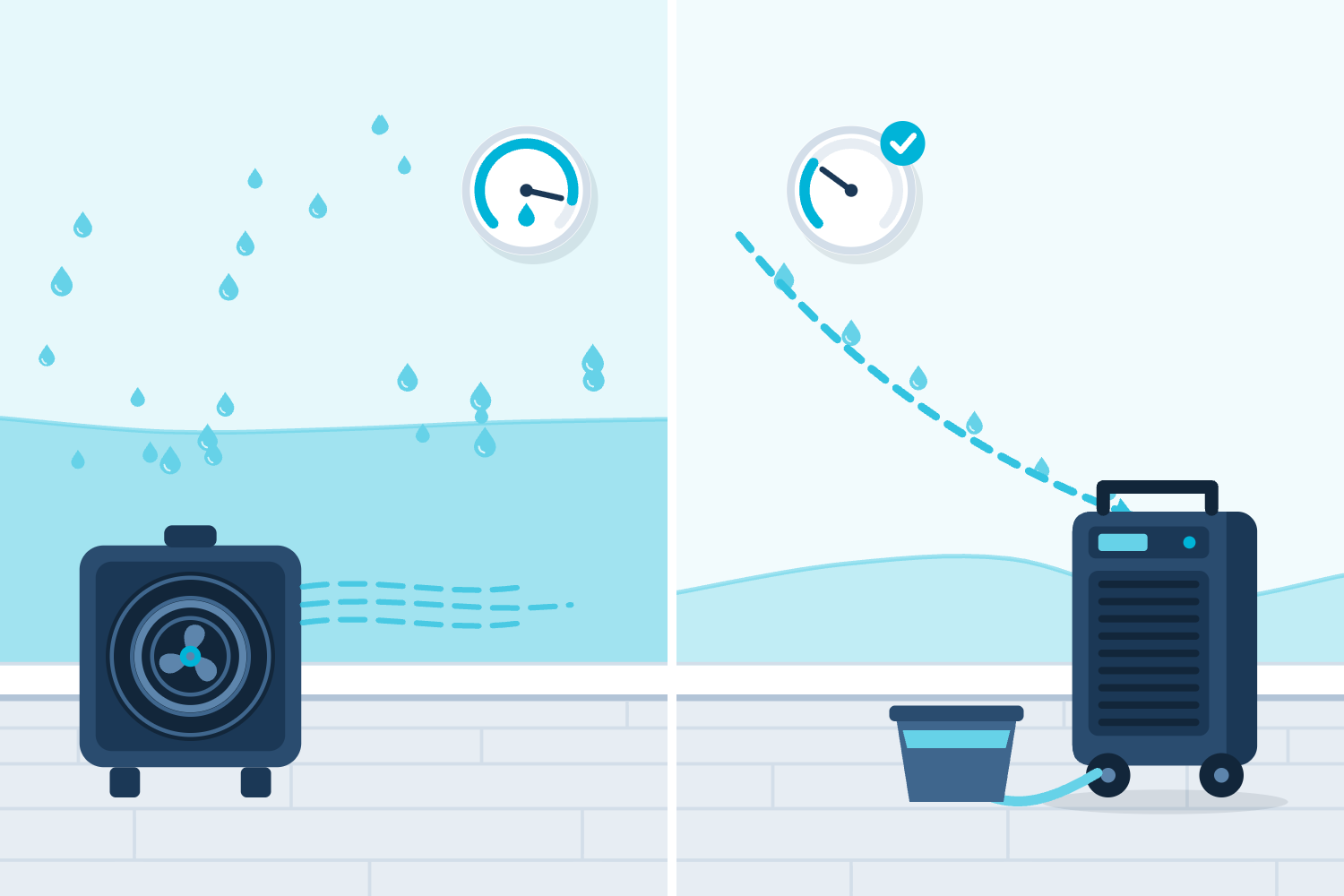
Fans help. FEMA and the Red Cross say, "Fans help move the air and dry out your home." But fans alone can fall short, for a few reasons.
The water has to go somewhere. Fans speed up evaporation, which moves water into the air. The EPA's table pairs fans with a dehumidifier to reduce "ambient humidity levels."
Hidden water stays hidden. The EPA calls the wall cavity "the most difficult area to dry." The subfloor under wet carpet needs drying too.
Dirty water changes the plan. The EPA says not to use fans until you know the water is clean or sanitary.
A small heater won't fix it. NDSU notes, "Small space heaters will have little effect."
This is where structural drying comes in. When we say structural drying, we mean drying the building itself: framing, subfloors and wall cavities, not just the surfaces you can see.
What does a typical drying schedule look like?
Every job is different, but the rhythm is simple. Here's how a typical Dryft drying job runs.
Day 1: Inspect and set up. We find the source, map the water's spread and take readings, including in dry areas for comparison. Then we remove standing water and set up dehumidifiers and air movers.
Each day after: Check and adjust. A technician comes back daily to take new readings, log them and adjust the equipment as areas dry.
Last visit: Confirm and wrap up. When readings meet the drying goals, the equipment comes out and repairs can be planned.
Every reading goes into the job file, so you and your adjuster can see the progress. More on how it works.
Why do the first 24 to 48 hours matter?
That's the window the EPA gives for preventing mold. The EPA says: "It is important to dry water-damaged areas and items within 24-48 hours to prevent mold growth."
It adds that when wet materials are dried in that time, "in most cases mold will not grow."
That doesn't mean every job wraps up in two days. It means drying needs to start fast. In the EPA's words: "When water leaks or spills occur indoors - act quickly."
The California Department of Insurance makes the same point: "Delay in cleanup can result in the growth of mold."
Materials wet for more than 48 hours, or mold already showing? The EPA points to its mold remediation guidelines instead. See our mold remediation page, or contact us to get drying started.
Related: Burst pipe? What to do in the first hour
Sources
FEMA and American Red Cross: Repairing Your Flooded Home (copy hosted by LA County Public Works)
Mississippi State University Extension: Disaster Relief Home Cleanup and Renovation for Floors
U.S. EPA: Mold Remediation in Schools and Commercial Buildings Guide, Chapter 4
California Department of Insurance: Residential Property Claims Guide